
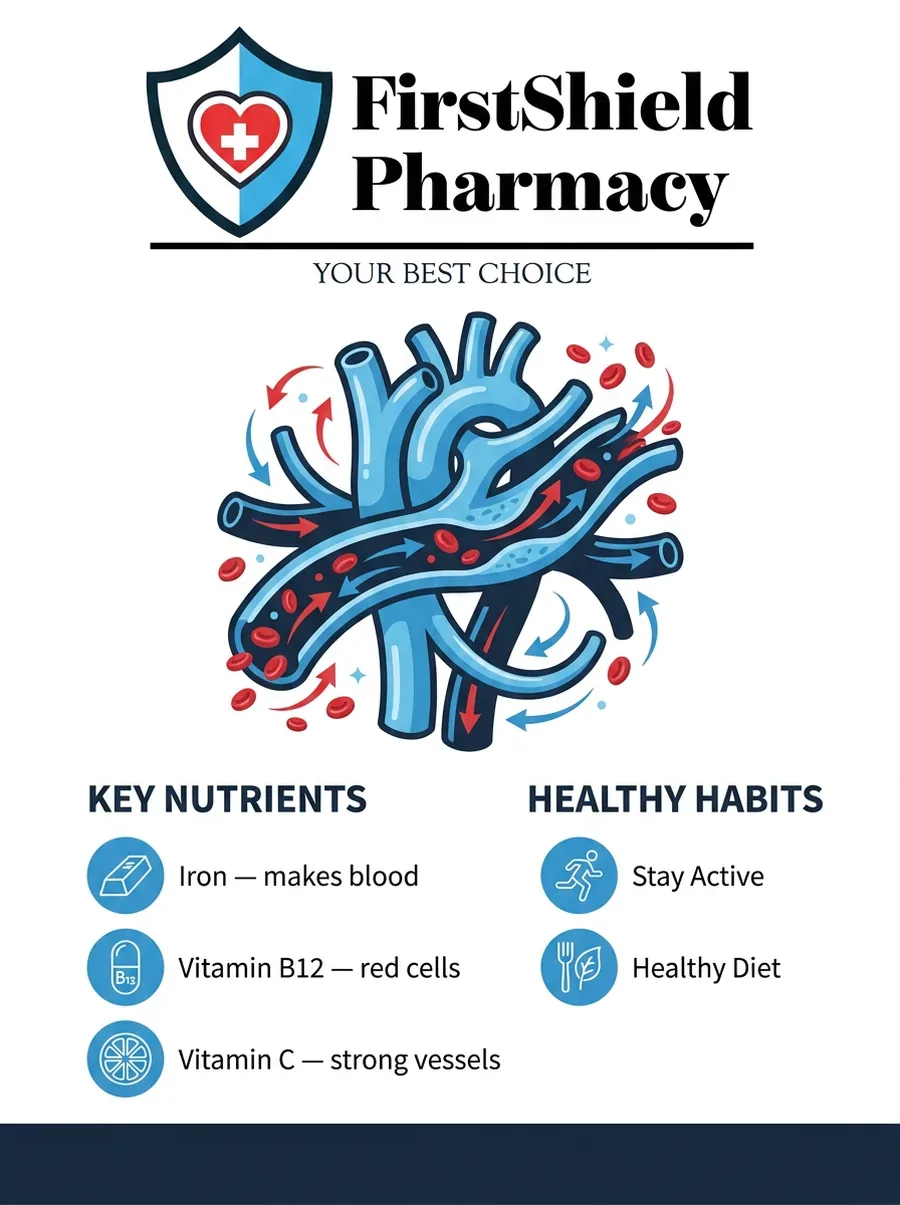
Healthy blood needs iron, folate and vitamin B12 to make enough red cells that carry oxygen.
Nutrients that support your blood
Iron
Needed to make haemoglobin, which carries oxygen in the blood. Low iron (anaemia) causes tiredness, breathlessness and pale skin.
- How much you need: Men 19 mg, women 29 mg a day (ICMR-NIN 2020).
- Best food sources: Green leafy vegetables, jaggery, dates, pulses, ragi, meat and eggs. Take with lemon or amla — vitamin C helps it absorb.
Be careful:
- Best after a blood test (Hb) confirms anaemia — iron is not a general tonic.
- Keep out of reach of children: an iron overdose can kill a child.
- Black stools and constipation are common and expected.
- Not within 2 hours of tea, coffee, milk or calcium tablets.
Vitamin B12
Makes red blood cells and keeps nerves healthy. Low B12 causes tiredness, tingling and numbness.
- How much you need: 2.5 mcg a day (ICMR-NIN 2020).
- Best food sources: Milk, curd, paneer, eggs, fish and meat. Strict vegetarians are often low.
Be careful:
- People on metformin for years are often low — worth a test.
Vitamin C
Helps make collagen for blood vessels, skin and gums, helps the body absorb iron, and supports immunity.
- How much you need: Men 80 mg, women 65 mg a day (ICMR-NIN 2020).
- Best food sources: Amla, guava, oranges, lemon, tomato, capsicum.
Be careful:
- More than 1,000 mg a day can cause loose motions.
- History of kidney stones: ask a doctor before high doses.
Everyday habits that help
- Stay active
- Healthy diet
When to see a doctor: Tiredness with breathlessness or pale skin: a simple Hb test tells whether iron is needed.
Before you take any supplement
- Supplements fill a gap in the diet; they do not treat disease. Anyone with a diagnosed condition (diabetes, kidney, liver or heart disease) or on regular medicines should ask their doctor first.
- Doses here are for ADULTS. Children’s and pregnancy supplements are chosen by the doctor.
- Only products made entirely of nutrients are suggested (vitamins, minerals, probiotics, amino acids, plant extracts) — anything that also contains a drug is left out.
- Daily amounts are the ICMR-NIN 2020 recommended dietary allowances where one exists; more is not better.
- Products are listed focused-first (1–3 ingredients), then multivitamins, each by how often our shops sold it — a multivitamin may carry only a small amount of a given nutrient.
Not sure what suits you? Ask our pharmacist at any FirstShield store, or message us on WhatsApp.